
I Feel Like I Am 30 Years Younger: Richard Gibson’s Kidney Transplant Story
I was a very active and healthy individual with no real medical issues or concerns. Then one day in 2012, out of nowhere, I got severe pains in my lower back and abdominal area.
My wife took me to the hospital, and there we found out that I had a hereditary kidney disease called polycystic kidney disease (PKD). At that moment, our lives changed. We went from a routine life to a life of true unknown.
As I researched and learned about this disease, I also discovered that I inherited it from my mother’s side of the family. I learned that she had a form of PKD, and that her brother also had it.
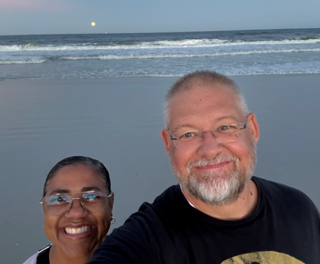
Over the next three years, life moved along, but our normal routines changed somewhat. We changed our eating habits, exercised more, and focused on what we could do to slow the progression of the disease as much as humanly possible. My mindset was that if PKD was going to challenge me, I was going to fight it with all I had.
This way of life continued for five years, and my kidney function stayed level. Suddenly in 2018, my kidney function (GFR) dropped from 60% to the low 50% range. The doctor told me the cysts on my kidneys had grown drastically in the past months.
Over the next year, my function dropped to 25%. My blood pressure had become drastically high, and my kidney doctor had a hard time trying to figure out a way to control it.
In 2021, I was told that my function was at 19% and that I needed to think about kidney transplantation as an option. I went through the testing at the Mayo Clinic and was approved to be added to the kidney transplant list.
This gave me hope! But as the next year went by, my kidney function continued to drop quickly. In the summer of 2022, I was told my function was at 9% and I knew my body was struggling to function. I was told it was time to start dialysis.
I knew people who were on dialysis throughout my life, and I saw what dialysis was like for them. I knew at that moment that things were going to be rough for me, but more importantly, it was going to be hard for my wife. All I thought about was, what will this do to us financially? Will I still be able to work? How will my body handle the treatments?
A few months later, I started peritoneal dialysis (PD). It was not as bad as I thought it would be. I did it while I slept and then went to work as normal. This worked well for me for the first three years, and we got back to a somewhat normal way of life.
Her surgery and recovery went fantastic. I was so proud of her! She had given me a new avenue of hope and possibility through her gift.
Richard Gibson
One day, my wife, Dee, told me she wanted to donate her kidney to someone so that I could be placed in the National Kidney Registry (NKR) Voucher Program. I was totally against the idea of her donating. She then asked me, “Would you donate a kidney for me?” I said, “Absolutely, in a heartbeat!” Her reply was, “Then let me do it for you.”
In early 2024, Dee started her journey to getting approved to donate her kidney through the NKR. That brought back my hope!
In December 2025, Dee donated one of her kidneys to a person in need through the NKR. Her surgery and recovery went fantastic. I was so proud of her! She had given me a new avenue of hope and possibility through her gift.
A few months later, I was told that PD had quit working and I needed to change to hemodialysis (HD). From the beginning, I could tell that HD was not going to be easy.
My first treatment did not go well. Then the second treatment was worse than the first. In the third treatment, I went into anaphylactic shock. Doctors could not figure out what happened.
A week later, they tried another HD session, but the same thing happened, and I went back to the hospital. I did not know if I would survive much longer if I could not do dialysis.
Over the next month, my dialysis nurse figured out what was causing my body to react the way it was to the treatments. Doctors followed her insight and I was soon doing HD at the dialysis clinic without any issues.
I could tell how hard treatments were on my body. I saw myself becoming weaker and I was uncertain how long I would still function doing HD.
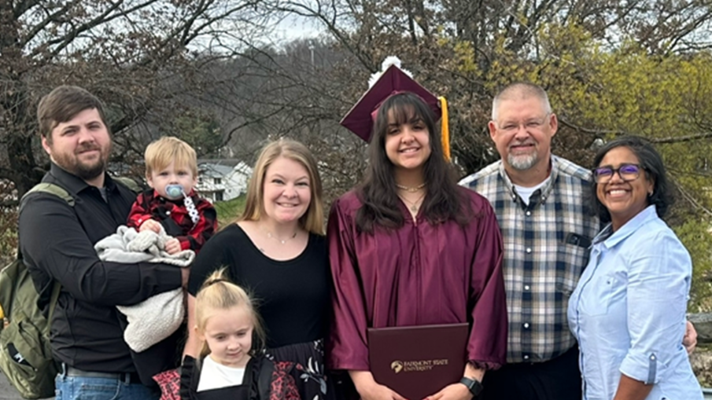
Then, in September 2025, the phone rang. It was my transplant coordinator at the Mayo Clinic. He said, “Richard, we have you a match!” I was in shock. He said they had found a living donor through the Voucher Program and my surgery was set for October.
I got off the call and went outside and told my wife. She and I were so excited and overjoyed. That night I could not sleep. All I kept thinking was, this is happening because she gave a kidney away for me.
October finally arrived and I received my gift on October 23. Surgery and recovery went very well. Fast forward to today, I feel like I am 30 years younger. My energy and mental function are better than 30 years ago.
Otis—that is what I named my new kidney—is doing fantastic. My wife named her remaining kidney Ollie. Otis, Ollie, Dee and I all have a bright and exciting future ahead of us. We have new memories to make, adventures to fulfill and love to spread, all because of the gift we were given through the NKR and the amazing group at the Mayo Clinic.
About the Author
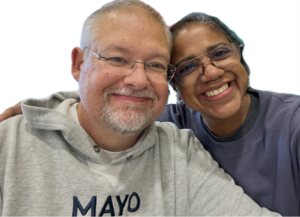
Richard Gibson resides in West Virginia. He has been married to his wife Dee for 26 years. He has two daughters and two grandkids. He has worked for the past 24 years as a Retail District Manager at one of the world’s largest retailers. Since his transplant, he and his wife are committed to raising awareness and sharing knowledge about kidney disease and transplant. They are also committed to spreading the word about the great work the NKR does to support those with kidney disease.